
Envirosentful?
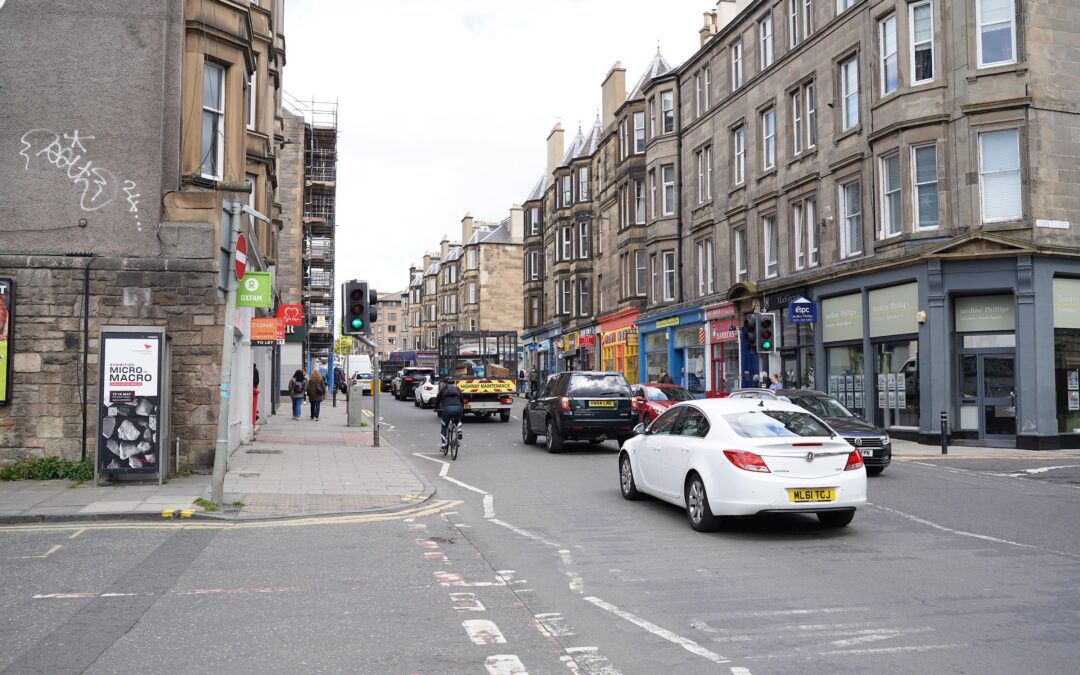
Have you ever heard of the word envirosentful? I’m sure not, because I just made it up. It’s the feeling of resentment when you are on a bike, or walking on the street, or even on a bus. Let me explain: imagine you’ve made a decision to transport yourself to your destination that prioritises the well being of others. A short journey in, say, Edinburgh, that will cause the least pollution, that will have the least environmental impact. So you decide to take your bike or walk down your local street, feeling the pleasure of doing something healthy, something which in itself is a good choice for you and your community. You tell yourself cycling in Edinburgh is a good decision; your energy increases, your mind becomes tuned to the peace and quiet, and maybe you see a friendly cat on the street. Until, just as you feel the flutter of endorphins, a big SUV passes by, filling the air with diesel fumes. The noise of its big, fat tyres drowns out the bird song you were enjoying, and the cat runs away. Sound familiar? Then you too have felt envirosentful.
The Thing About Cars
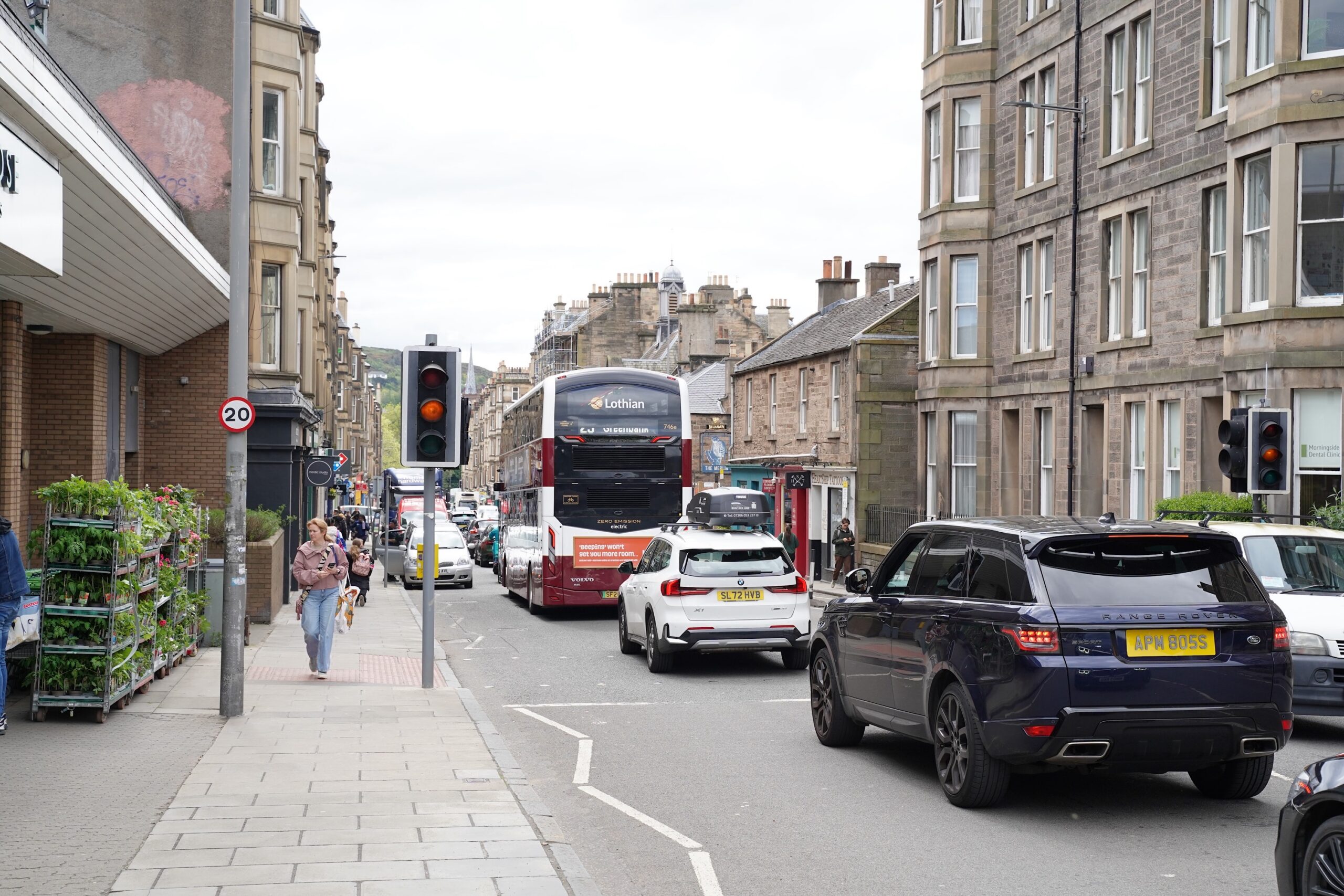
I don’t want to have an existential crisis every time I ride my bike in the city, or consider myself reaching a state of Eudaimonia, a life of goodness idealised by the Ancient Greeks. But it’s an inescapable fact that some people think very differently about this issue. Perhaps they never really think about making good choices. They leave their homes and, without hesitation, jump into their cars. Maybe they never consider taking a bike, and don’t like walking or even taking a bus. Many simply like their cars. They define something about them, represent their aspirations; they stamp something of who they are on to the world, or into their community. It’s a statement: This is me. Whatever. The point is, I honestly think that many of these people don’t ever think about the dirty air they leave behind as they pass you by on the road, or whether or not they are adding to the constant congestion in their communities and cities. On average, the time spent driving per person in Edinburgh during 2024 was 235 hours, and 94 of them were due to congestion.
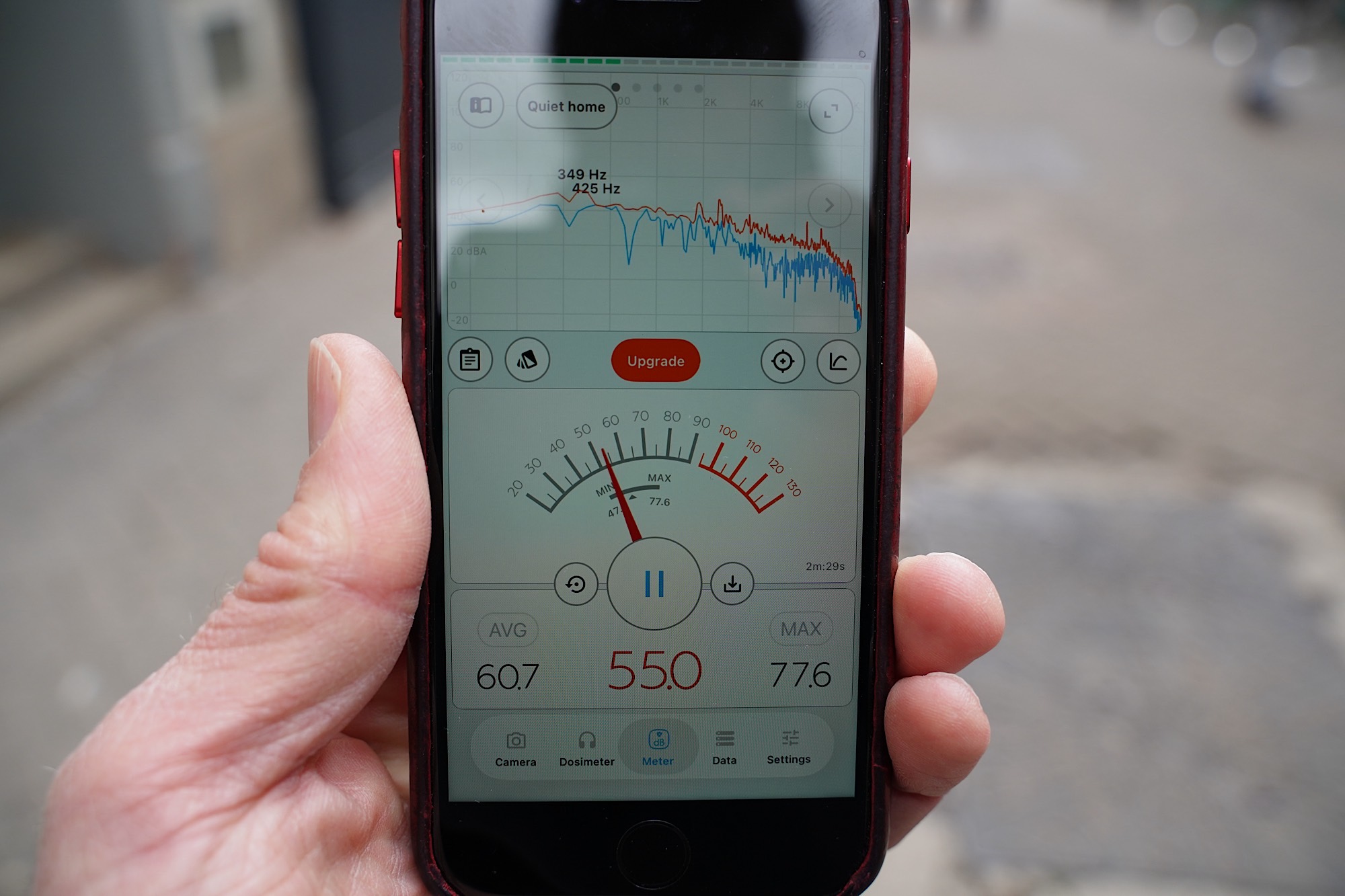
On a pedestrianised road, decibel levels are around 50 – 55. A busy road measured between 75-85 decibels.
.
Bad Roads and Even Worse Choices
I’m not raging here. I’m just often disappointed when I see a neighbour driving to the local supermarket. I see them coming back with a couple of bags, sometimes just a single item in their hand. And I think…why not take a bike? Or walk? Is your time so precious to you that you can’t spend ten minutes walking on your local street, taking in the sights and sounds of your neighbourhood? Edinburgh has made improvements, but 40% of all travel in the city is still done by car. It’s a compact city served by good public transport, but full of bad roads and congestion, not forgetting the huge costs of parking. Its transportation network could be so much better. I’m convinced that if people did make an effort to make good choices, not just for themselves but for their neighbours, for the kids coming home from school, for all those who want to enjoy fresh air and to feel closer to nature, all its residents would really benefit. 88% of people in the city believe that urgent action is needed because of climate change, yet only 4% of them have ultra low emission vehicles.
The 95% Fact
I know people who refuse to take a bus even though it stops right where they live. There’s not always an excuse to not make a more environmental choice, though many will always justify the use of their car. I understand that some people need one to commute, or they have trouble walking, or they live too far from their place of work. However, I’m sure that in many cases the use of a car is no more than a habit, a choice that’s both easy and comfortable to make; I get it; the car separates you from the world outside, just as driving offers an aesthetic, tactile pleasure and a sense of empowerment, and that can be nice. You own the thing, pay taxes for it, so you also need to justify having it. But in the end, that big hunk of steel that sits outside your house for 95% of its life, affects not just how you get around, but also your relationship with the people around you.
The Edge of the Road
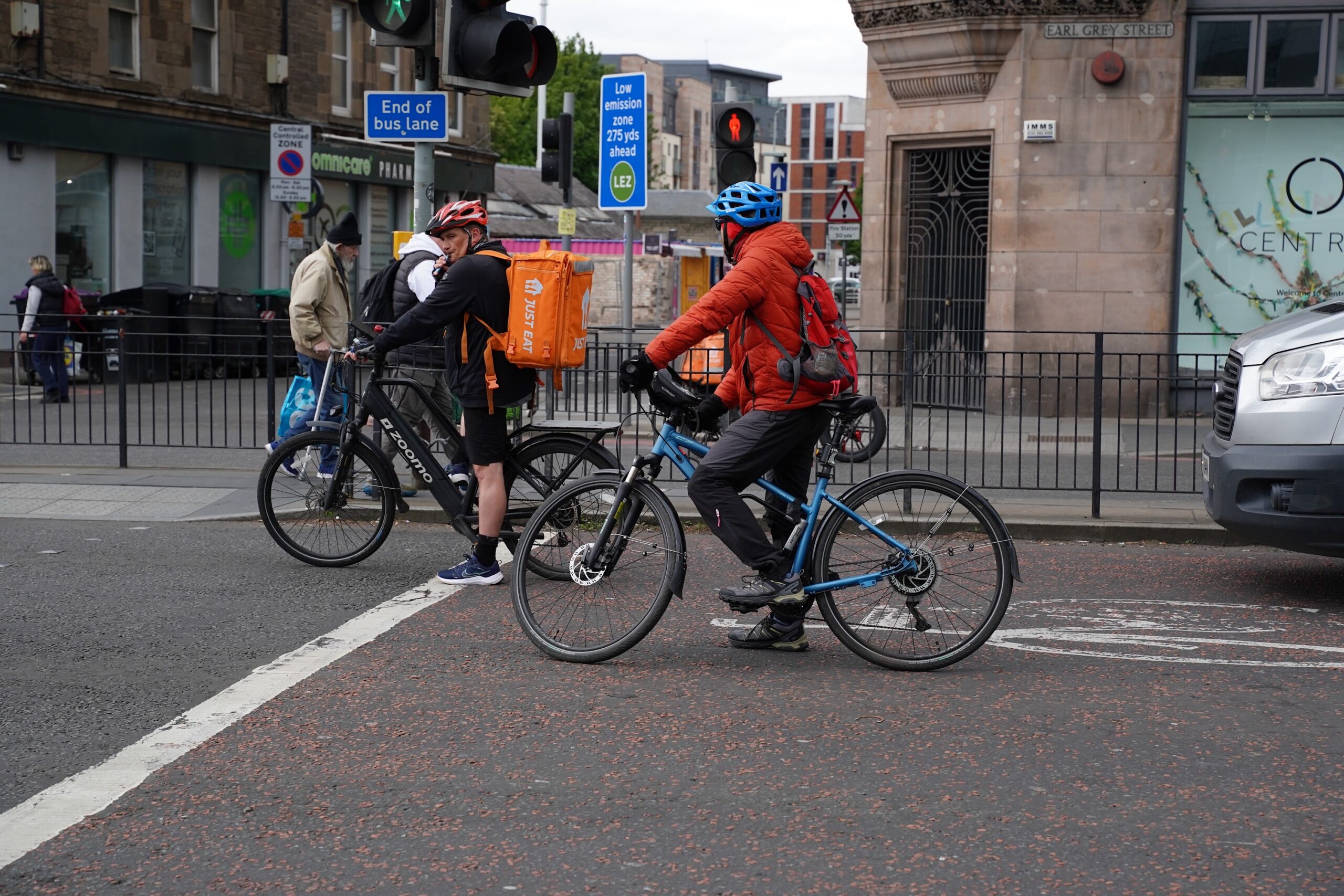
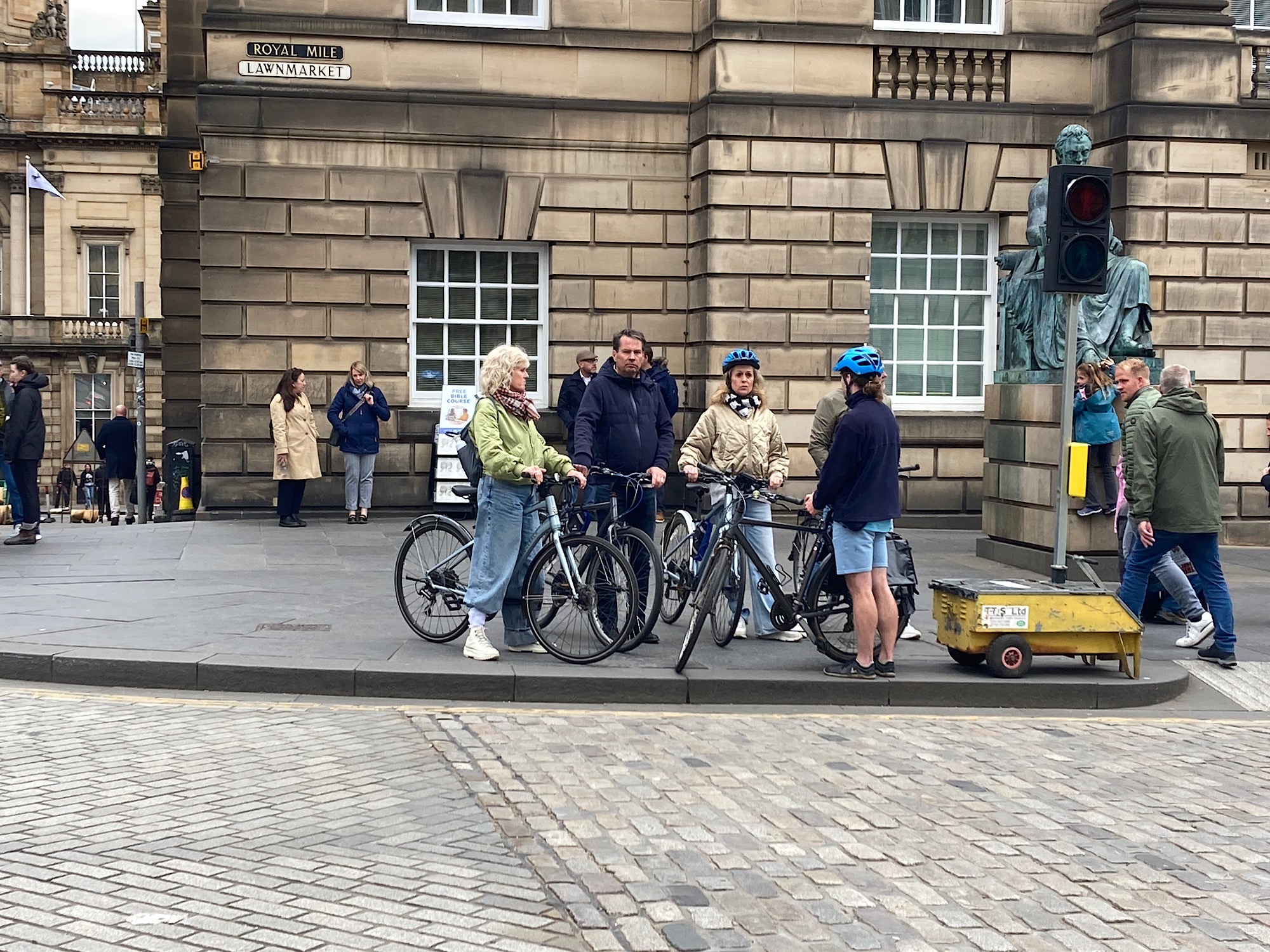
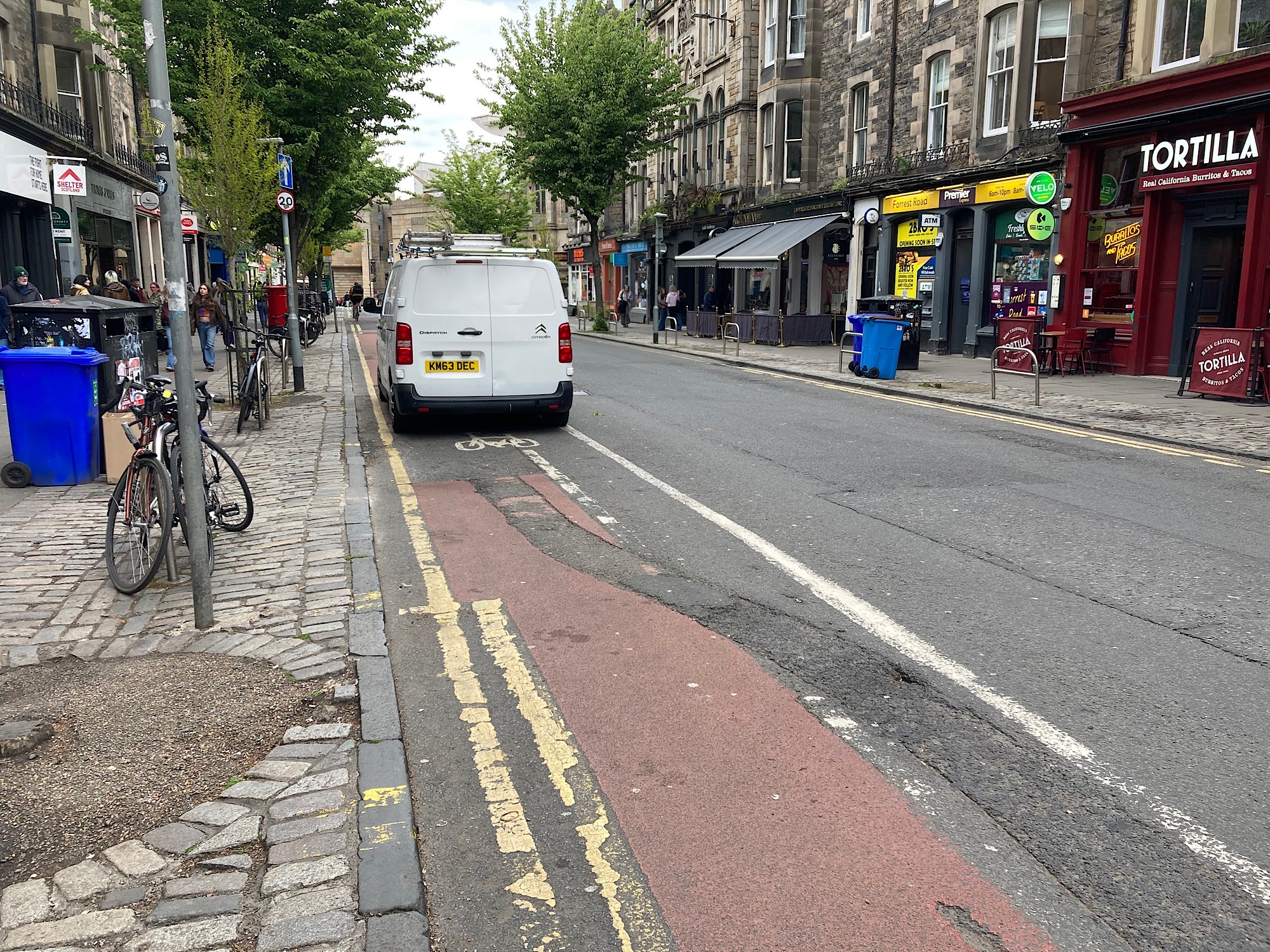
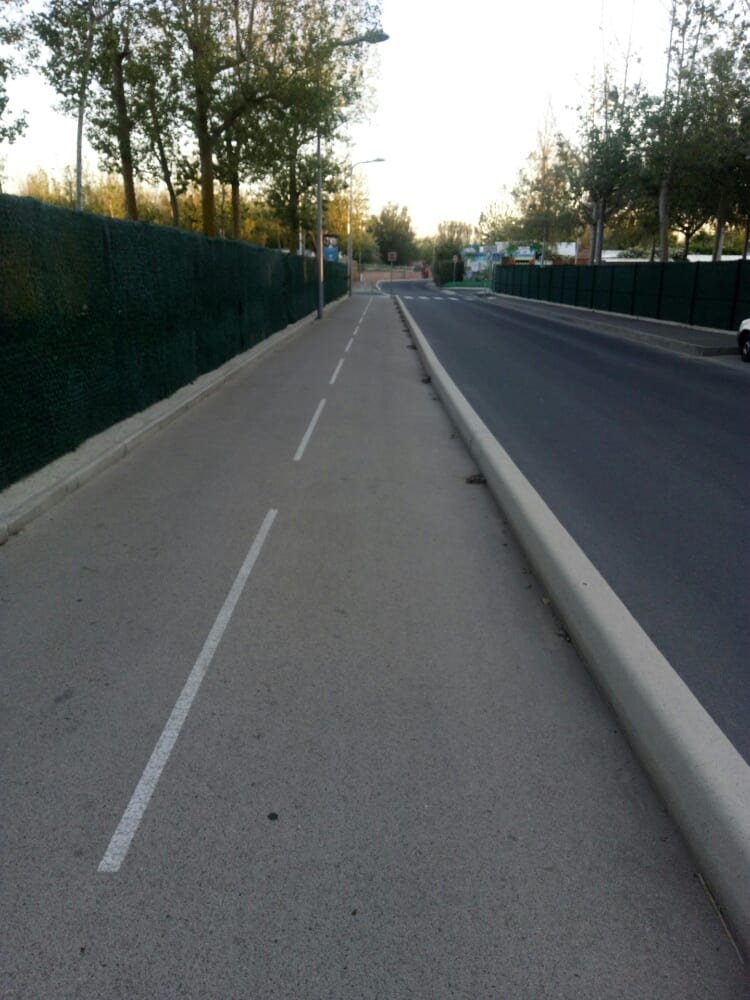
I suffer with envirosentment because some people deny me the pleasure of being closer to nature. Their cars are noisy, polluting, often anti-social and obnoxious, and frankly, they’re everywhere. I can make a good decision to take my bike and save others unnecessary exhaust fumes and noise, but many others just don’t and won’t. And yes, I sometimes resent them. I see it as a sign of the times; we need more fundamental change, to prioritise the collective instead of putting our own selves first. Isn’t the cyclist an ultimate symbol of all this? Often hated by drivers, reduced to the edge of the road, never free or at ease to enjoy the city or countryside without fear of being crushed by bigger and faster objects. Governments and councils have simply not done enough; you can’t tell me that their efforts to produce a proper network of bike lanes in the last thirty years have been sufficient. Far from it. It’s like giving ear muffs to someone in a loud room. The problem is not the person’s ears, but the sound that’s dominating the room. And sadly, there are so many who’d be happy to bring in even bigger speakers. They deserve my envirosentfulness.
Is it a bike lane, or a parking bay?
The Bike as a Symbol of the Future
We live in a time of unprecedented information exchange and opinion, disconnection and division. It’s unlikely our beliefs will align with others, even if those people live in the same communities as us. Politics, climate change, free speech and religion, immigration and Brexit, the Royal Family and inequality; we’re inundated with different opinions espoused by leaders intent on ever-widening the gap between us. No wonder the opening of a new bike lane causes fits of rage amongst certain people, or causes drivers to blame each other for the state of transportation network. It’s a vicious circle caused by a merry-go-round of conflicting agendas and irreconcilable ideas, spun by governments and leaders who somehow think that such contradictory forces can be sustained. It’s becoming ever clearer that they can’t. The bike is the purest symbol of this battle for a better and sustainable future.
The future of our roads?
Recent Comments