
One Friday Afternoon
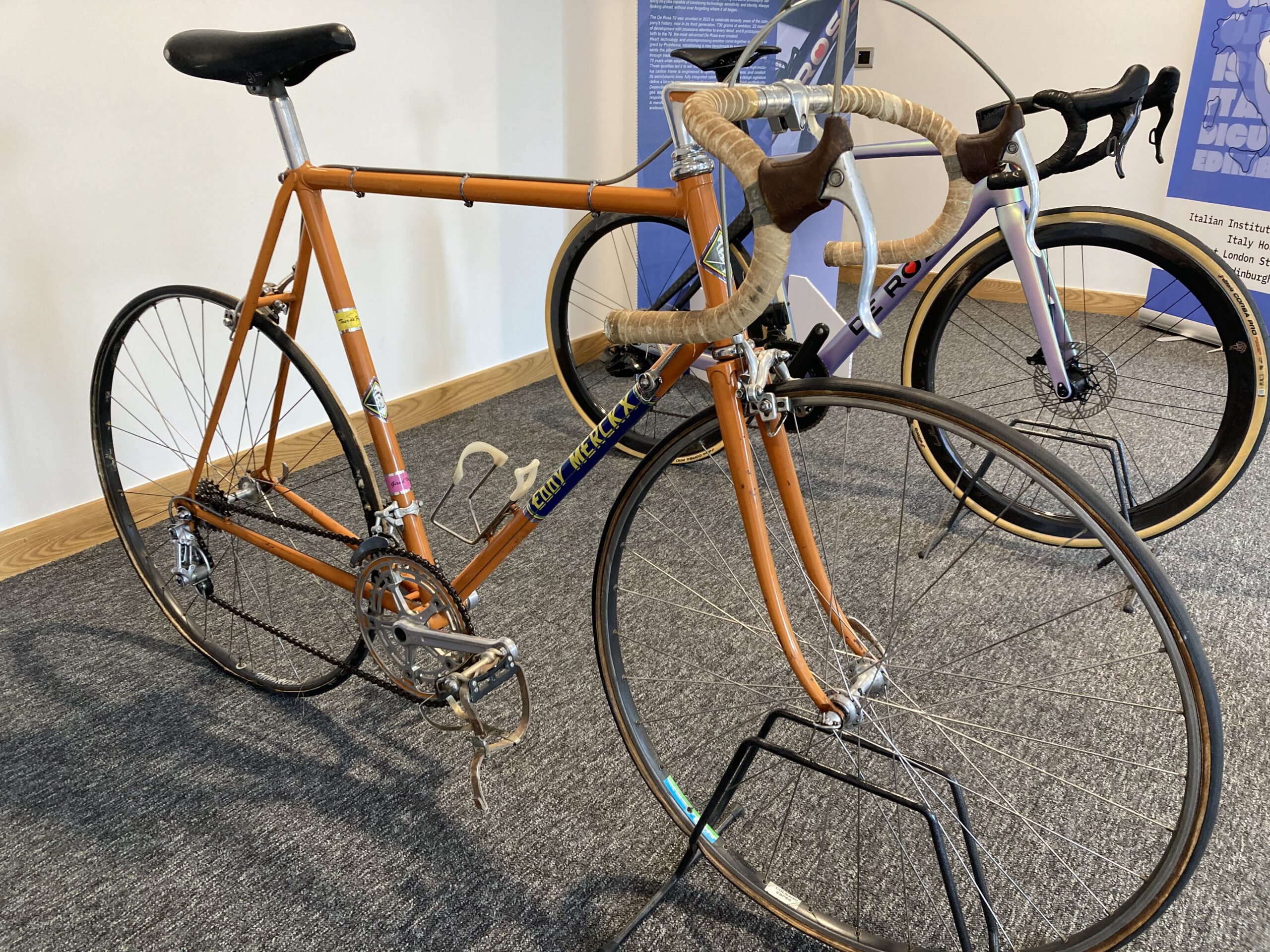
It’s not often you have the chance to have a moment alone with a legendary bike, especially one ridden by perhaps the greatest rider of all time. It was just by sheer luck that I came across an event listing by the Istituto Italiano di Cultura di Edimburgo, called “Italian Icons”, celebrating great Italian bikes. The event had been running all week, ending on the very afternoon I happened to find it. I looked at my watch: it was 4.15, and the event would close it doors at 5pm. With sudden panic, I contacted the institute and booked myself in for the very last slot of the afternoon. It was a warm July day and I raced down to Leith as fast as I could. Little did I know that Merckx’s 1973 De Rosa was waiting for me.
Art and Sunlight
Arriving breathless and covered in perspiration, I was surprised to see that I was the only visitor for the event. Lights were switched on and doors were opened for my sole benefit, and I was given a good half hour alone with some incredible bikes. It was my lucky day, but my phone had barely enough power left to take any photos. Glimmering in the late afternoon sun, were a dozen gleaming, fantastically beautiful machines standing silently across two rooms, including some very recent carbon fibre editions that had been ridden in tour races, Those bikes stood like big cats ready to pounce, their sleek, aggressive, aerodynamic frames looking space-age compared to the vintage steel bikes. But it was Merckx’s 1973 De Rosa Molteni that called out to me most.
Merckx’s Bike
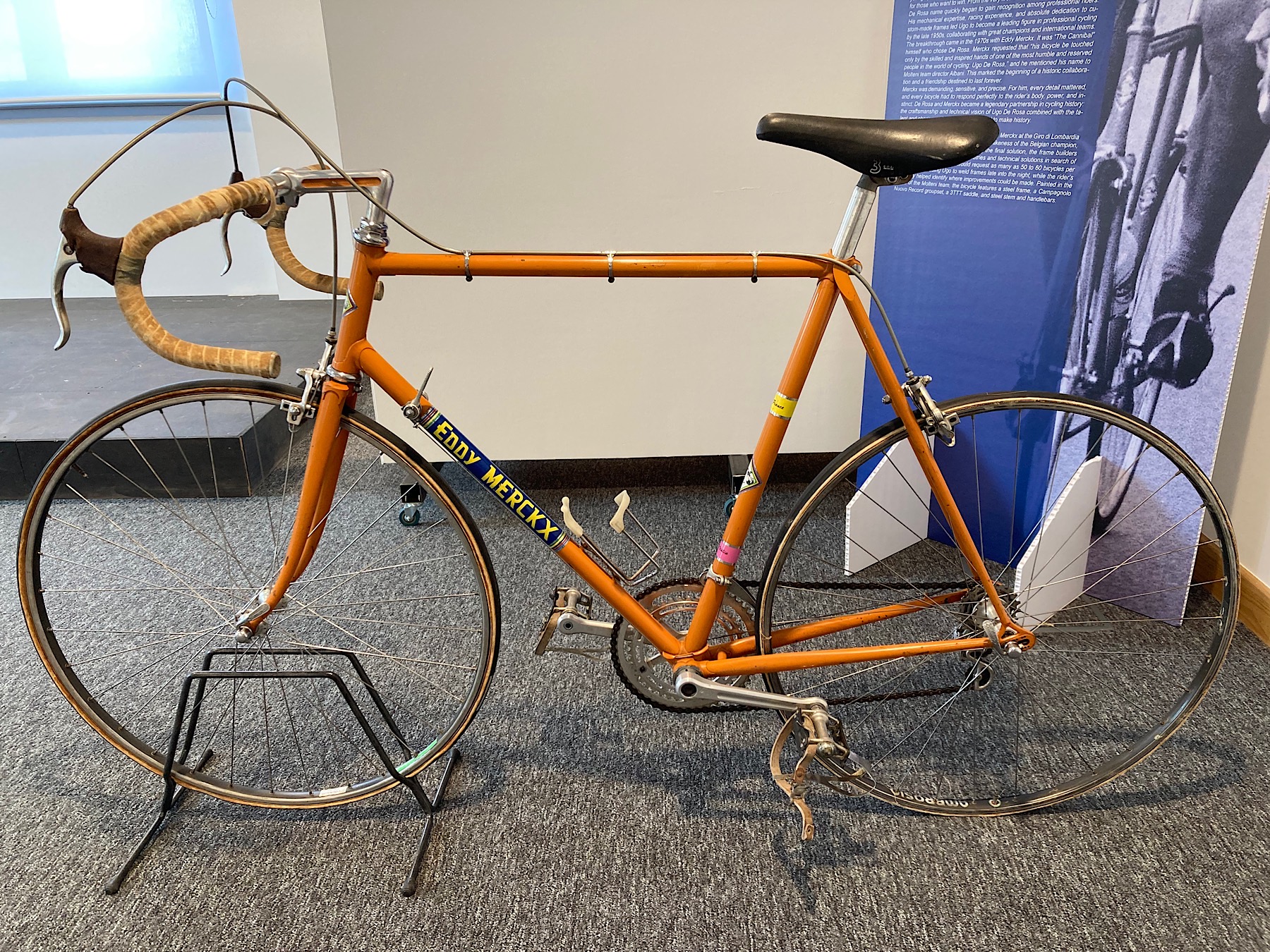
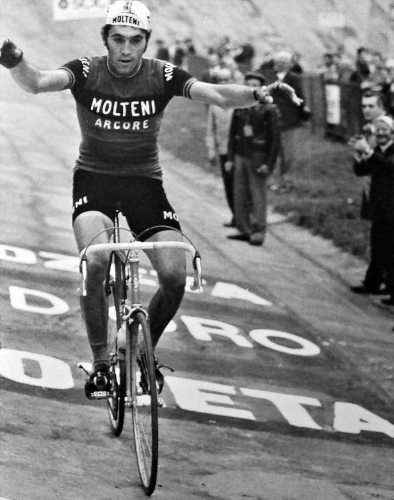
This particular bike, a De Rosa in Molteni colours, was actually ridden by Merckx in the 1973 Tour of Lombardia. I had to read the info board twice to convince myself. This bike? This actual one in front of me? I stood there for a minute and looked around, hesitant at being alone with this iconic machine. There wasn’t a soul around, and the place was in complete silence. I brushed my fingers along the top tube, feeling the smooth paint, the texture of the steel, and I put my hands on the old grip tape of the handlebars. It wasn’t just a visual treat to see the bike so intimately, but a real tactile experience. I picked up the whole bike, it seemed to weigh about 20lbs, and was able to explore each component of Merckx’s bike.
A Race Winner – Sort Of
I didn’t know at the time, but this bike was at the centre of a controversial doping scandal, after Merckx’s victory on it in the Giro De Lombardia. Two months after his success in the one day race, he was disqualified for taking norephedine, an over-the-counter drug. He claimed he took it for his cold symptoms, and he successfully fought against the ban that the UCI imposed, a ban that would have prevented him competing in that year’s Tour de France. But though he may have overturned the ban, Felice Gimondi was declared the winner of the 1973 Giro de Lombardia. Merckx may have denied the charge of doping, but the records will always show Gimondi was the race winner, even though he was a good four minutes behind The Cannibal on the day.
Details
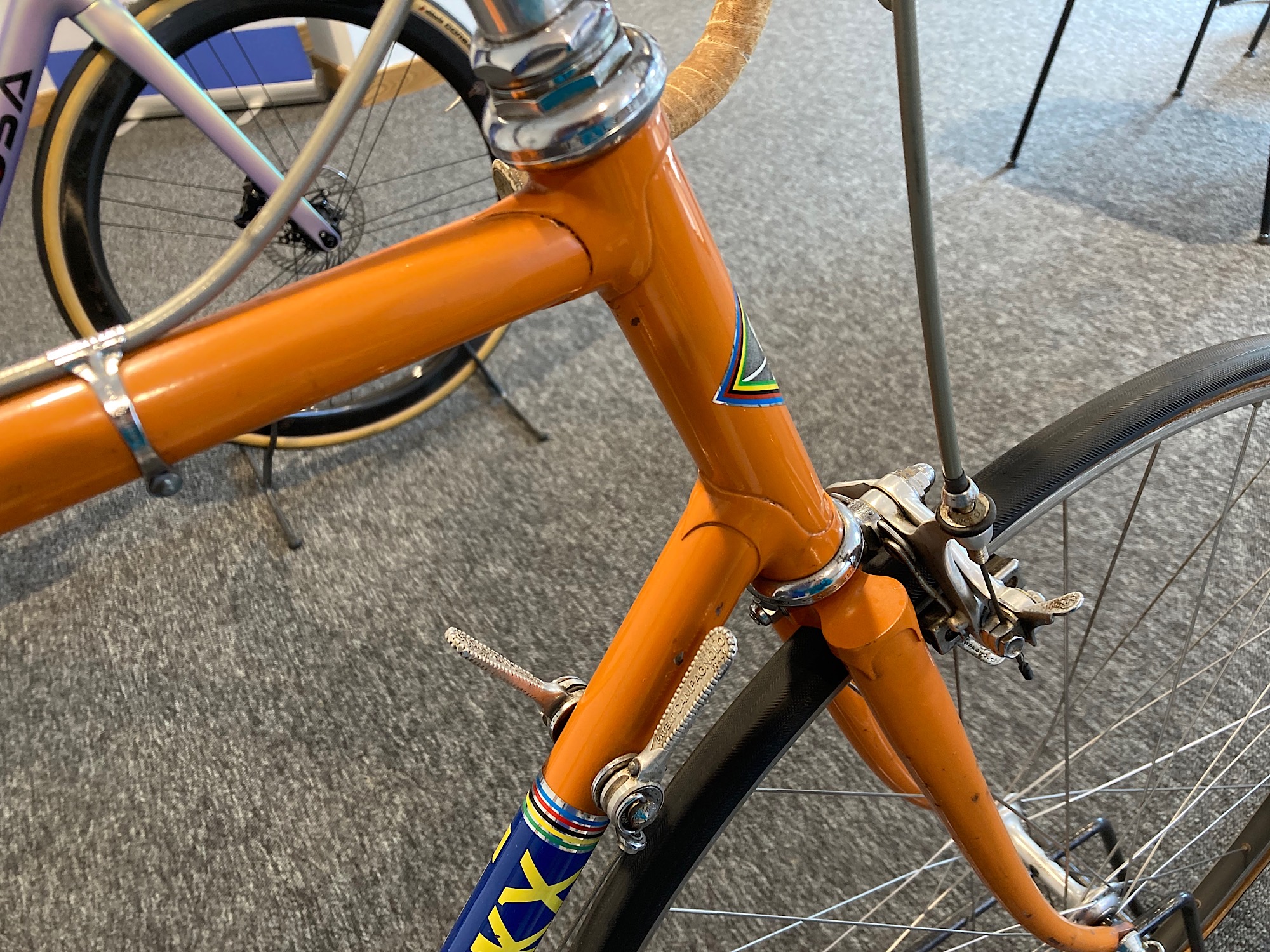
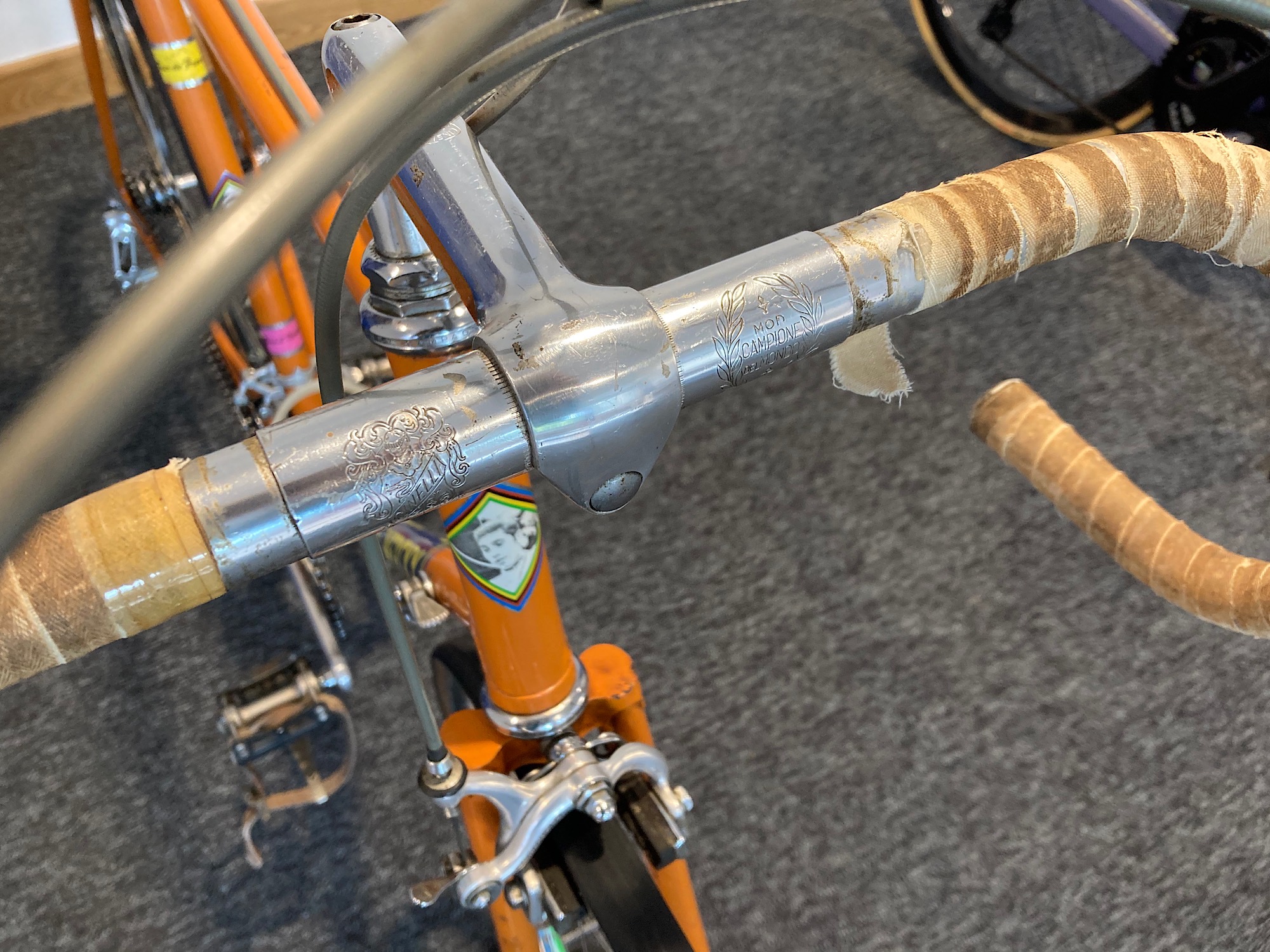
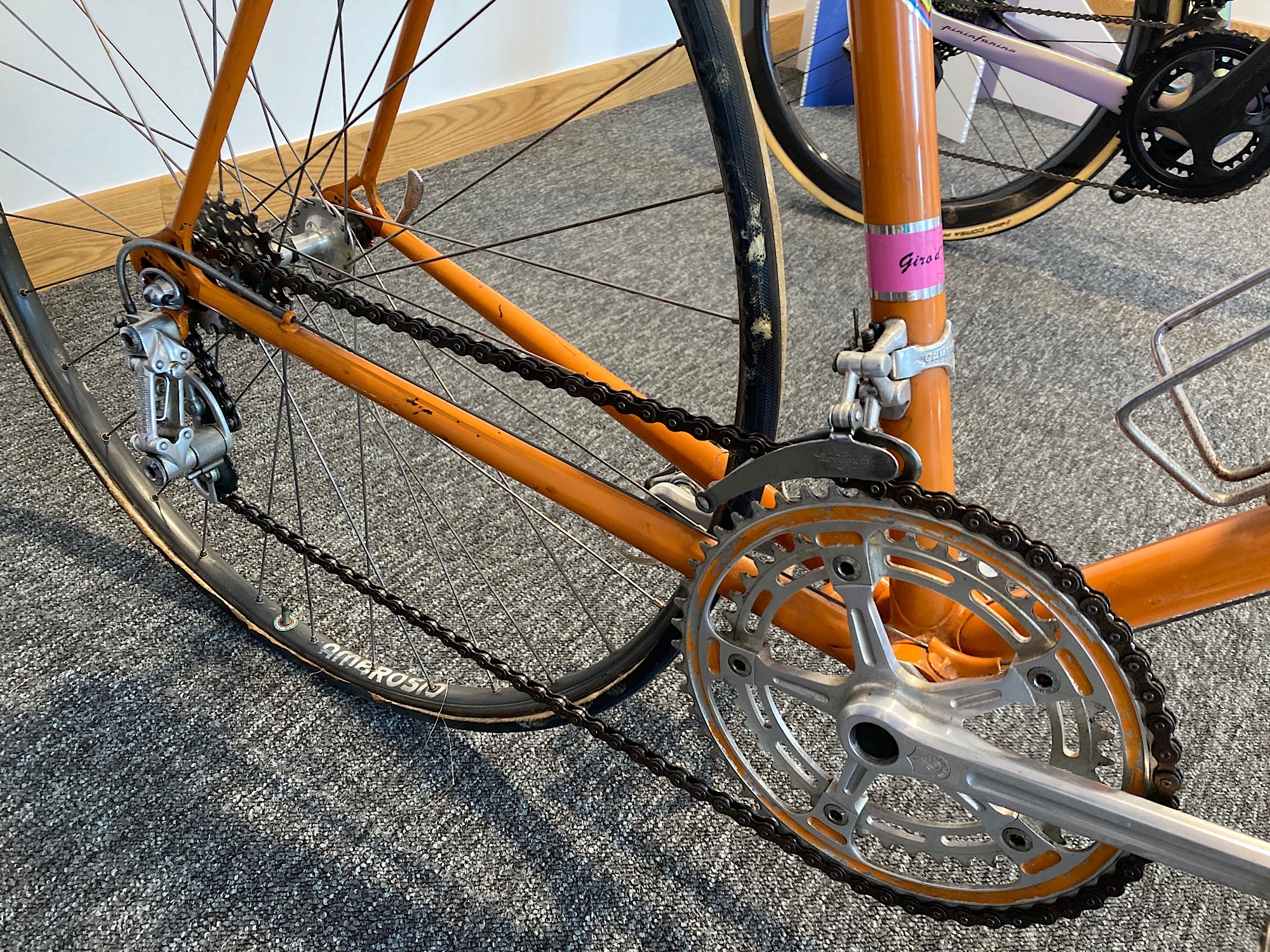
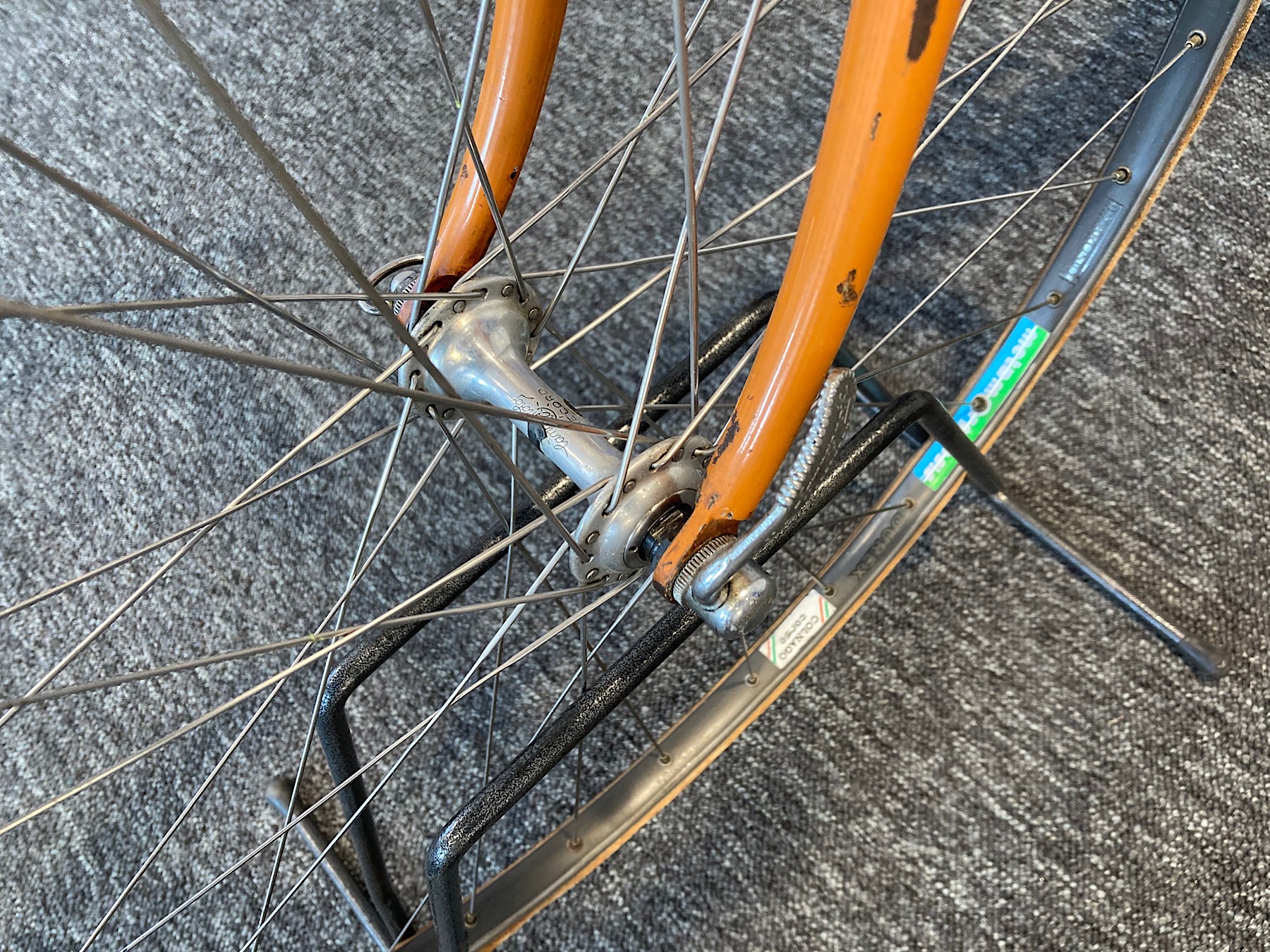
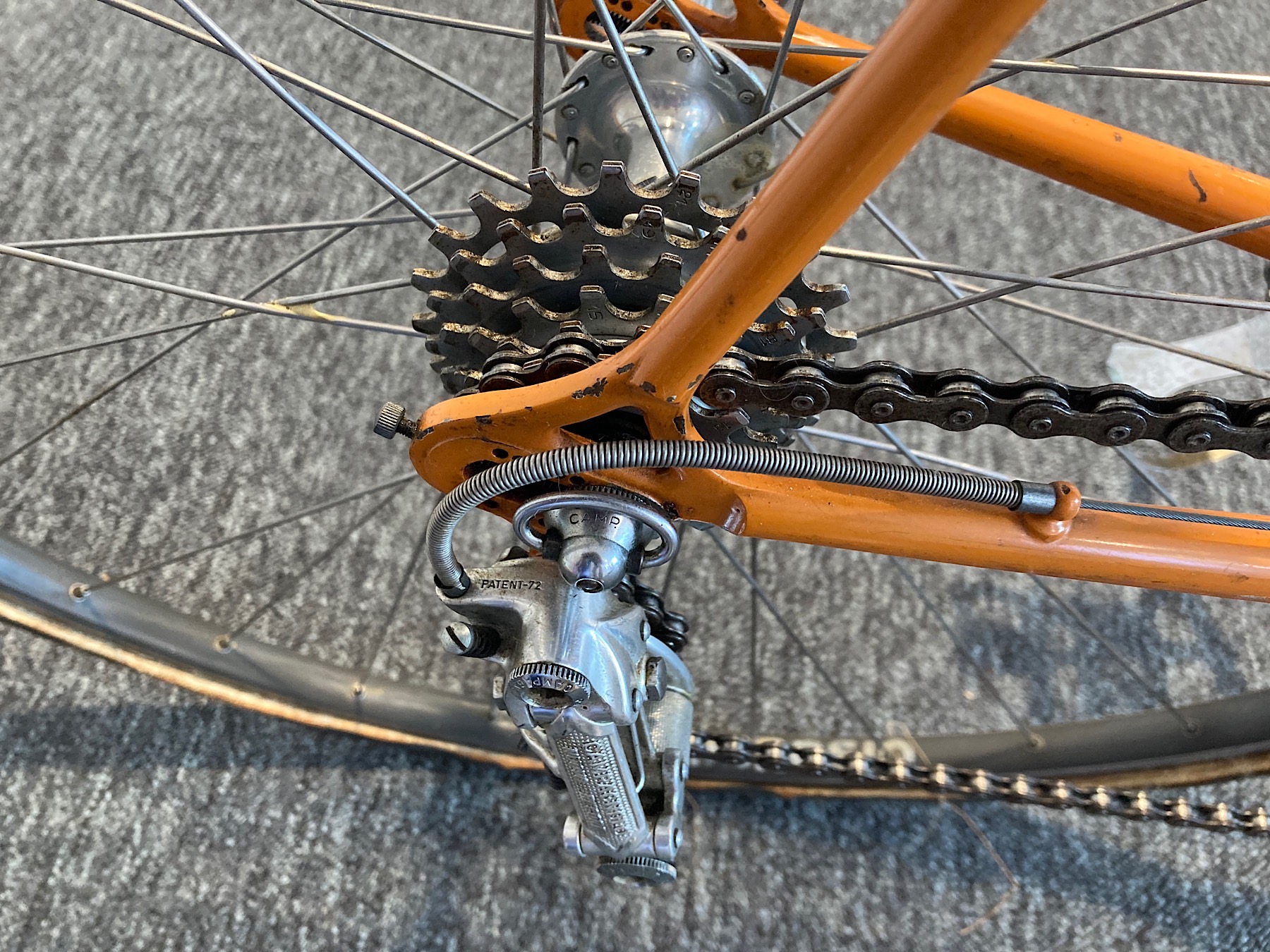
Merckx was a stickler for detail, a perfectionist, who had to have everything tuned on his bike just right. You only have to watch the film “A Sunday in Hell’ to realise how precise he was with the set-up of his bikes. Ruler in hand, he’d measure the height of his seat post to the smallest margins, and go through each function of the bike’s mechanisms. His frames were custom-built by De Rosa, and they’d send him over sixty a year. As expected, the chosen group set was Campagnolo Record, the handlebars and stem Cinelli, all Italian parts. Look at the size of the crank rings: with a corn cob freewheel, this bike was a powerhouse on the flat but pitiless on the hills. A pair of anodised Ambrosio rims were laced to low flange Campy hubs, and I wonder if the Clement tubular tyres are original.
Is this the Most Iconic Vintage Racing Bike?
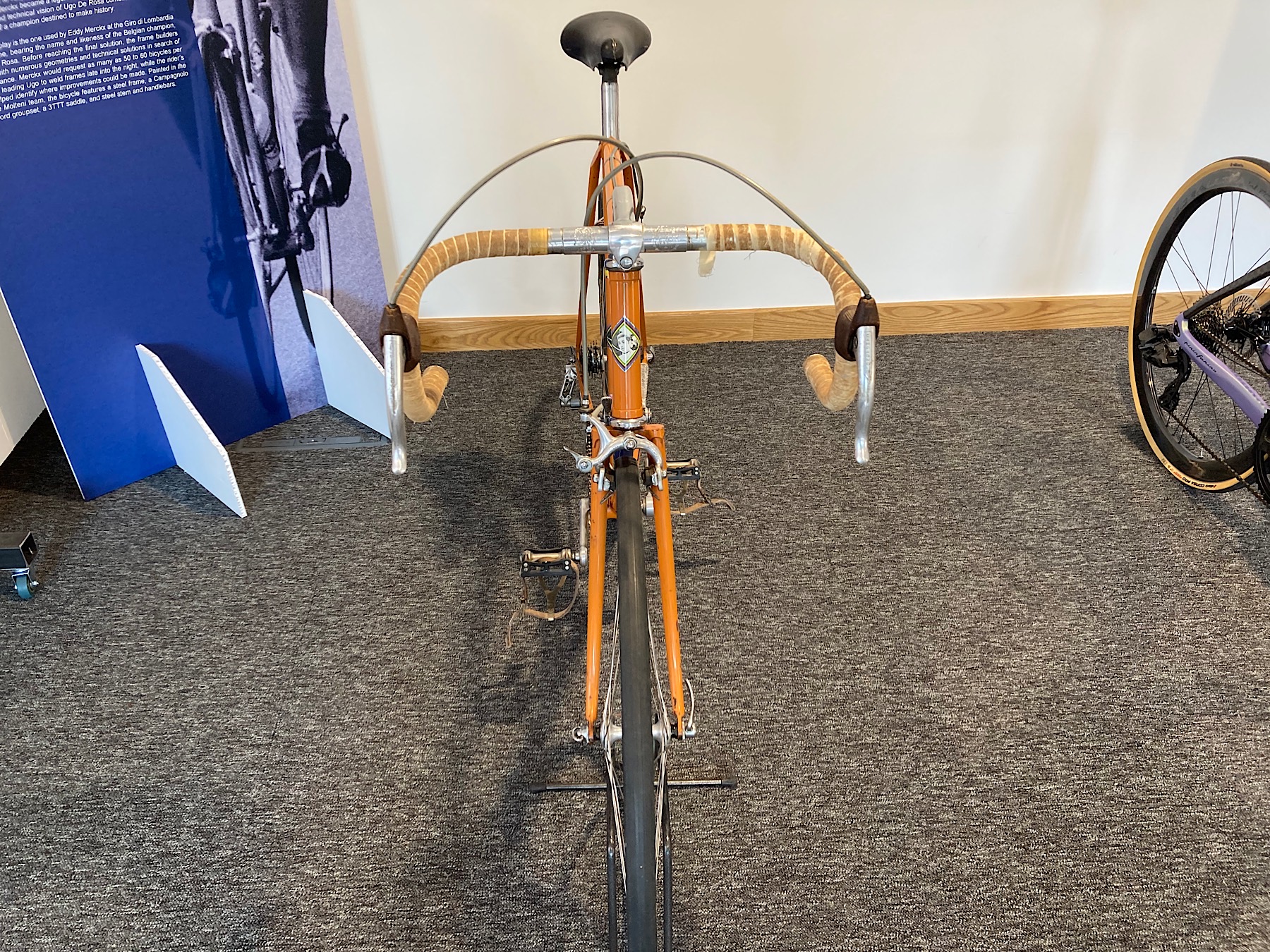
I think it is, and this one looks like it’s been in a time capsule. There are very few marks on it, and check out the paint; it’s as shiny as it was back when he rode it out of Milan, which is remarkable in itself. I’ve always loved the colour and ignored the fact that Molteni was a sausage company. It just looks beautiful, and I have to say, Merckx’s bike was the stand out in an exhibition of the highest quality Italian bikes over all eras. It shows how provenance affects desirability, how pedigree brings value to a marque beyond the sum of the bike’s parts. But even being conscious of how that affects your view, there’s no disputing that this bike is simply a beautiful machine.
Riding it
I wonder how it would ride, if I jumped on it and took it out onto the streets of Edinburgh. I did own a lovely De Rosa frame once. Of course, this bike would need new sew-ups first, but it seems a perfect fit for me, a 58cm, though Merckx was 3cm shorter than me back when he was racing. This bike, like many other fantastic vintage models, belong to a museum in Italy dedicated to bikes. I’d love to go one day. It’s called the Ghisallo museum, in the Como region of the country. It looks like a great place to see more iconic bikes, and definitely worth a visit. If you can’t make it it there, check your local Italian institute; you never know, you could find yourself alone with this De Rosa, and other great bikes.
Recent Comments